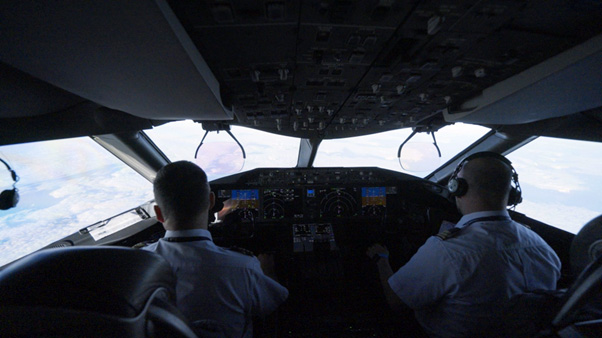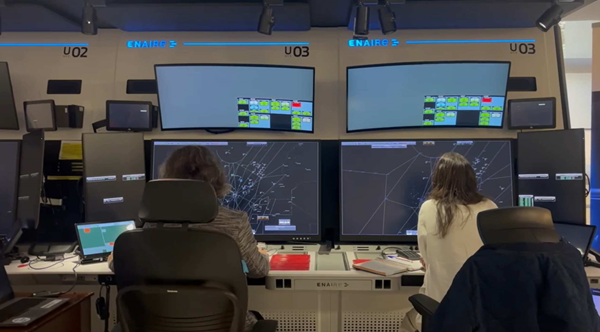
Aircraft flying over the ocean no longer appear on ground-based radars once they are about 350 kilometres from the coast. To monitor and stay in touch with these flights, controllers today rely on high frequency radio and data link communications, through which aircrafts can also report their position. While these technologies allow controllers to maintain contact and assure safe separation, their high levels of latency mean that communications is slow and, subsequently, results in significant time lapses. It also means that to ensure safety, controllers must increase separation minima between the aircraft.
Although global navigation satellite systems and space-based automatic dependent surveillance-broadcast (ADS-B) already exist for some parts of the world, there is still limited use of satellite-based technologies for communication, which in turn limits airspace capacity and flight efficiency.
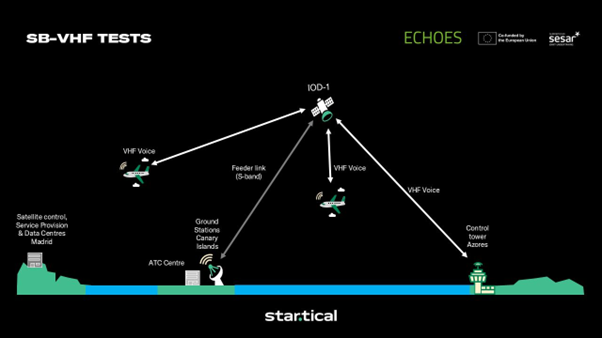
The overall objective of ECHOES was to demonstrate the feasibility of space-based solution for very high frequency (VHF) communications (voice and datalink) in air traffic management. Building on initial technical proofs of concept carried out by the VOICE project, the ECHOES Digital Sky Demonstrator investigated some key functionalities, such as inter-satellite links, on-board processing of data in the satellite or simultaneous transmission and reception of VHF communications. In addition, the Demonstrator focused on operational aspects of the technologies as well as comprised operational topics, involved more stakeholders (airlines and ANSPs) and contributed to the regulatory and standardisation of the space-based VHF technology, based on the analysis of end-to-end system performances.
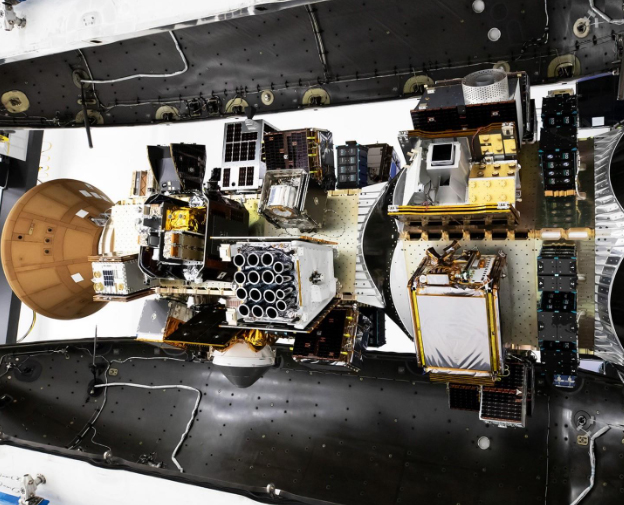
In order to provide the required services and test this technology, along with deploying all the needed ground infrastructure, ECHOES developed, manufactured and launched two satellites in a low earth orbit. These satellites served as the platform to test the technologies and services aimed at improving the air navigation services.
ECHOES conducted a series of use cases in the south Atlantic corridor, including southwest and west European oceanic airspace, which had the following objectives:
- Demonstrating the technical feasibility of VHF voice and data link and determine end-to-end service parameters (availability, latency, data rate), in combination with satellite-based ADS-B.
- Performing an initial assessment of the potential reduction of the required minimum separation between aircraft in oceanic regions, giving input to standardisation bodies in order to evaluate an update on the performance-based communications concept and support standardisation and regulation activities.
- Performing an environmental impact analysis and a cost-benefit analysis model to quantify the environmental benefits and how the technical performance of the service can be an enabler of disruptive green procedures, such as permanent contrail avoidance or more efficient trajectories”